
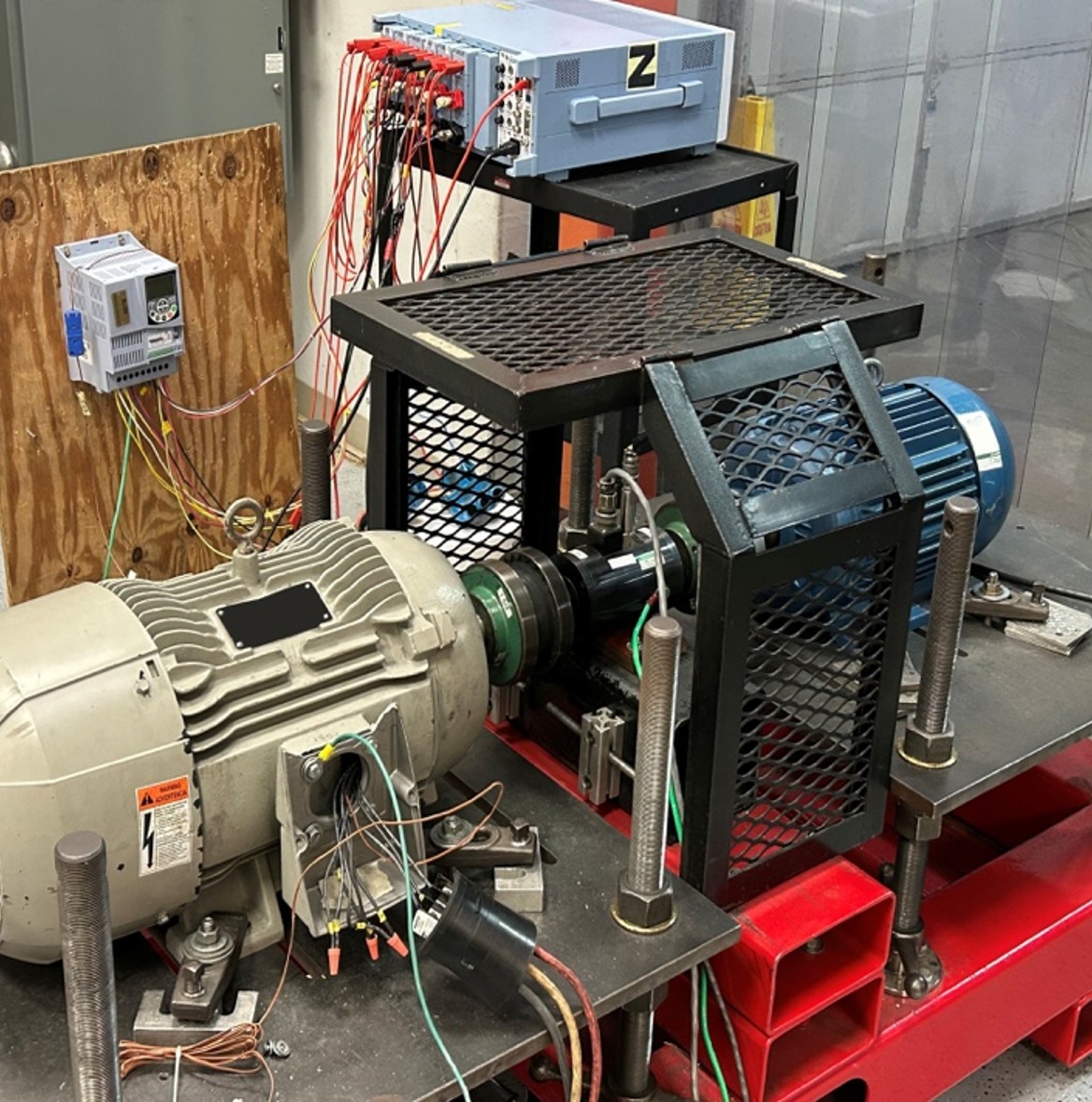
 Project Title
Improved Power Drive System Efficiency Calculation Method for HVAC Applications
Project Number CR22PGE0301-2 Organization PG&E End-use HVAC, Other, Process Loads End-use Other Fans, Pumps Sector Cross Cutting Project Year(s) 2022 - 2025Power Drive Systems (PDSs) consisting of motors and variable frequency drives (VFDs) are used for many applications, including for powering heating, ventilation, and air-conditioning (HVAC) equipment components, such as fans and pumps. Many of these end-use products are sold by component manufacturers without the PDSs. Various standards organizations and regulatory bodies have considered and/or adopted approaches for rating product performance that allow manufacturers to use predictions of efficiency for typical PDSs to determine wire-to-flow medium (e.g., air or water) efficiency, thus avoiding the need to rate performance for every combination that might be sold. To provide information to customers that is accurate but does not overpredict product efficiency, test procedures should ensure that PDS efficiency prediction methods do not overestimate actual PDS performance, while avoiding large underestimates that unfairly penalize products. A previous report, “Evaluation of Power Drive System Efficiency Calculation Methods for HVAC Applications” evaluated the following PDS efficiency prediction methods:
AMCA 207:2017 method: The method prescribed in Air Movement and Control Association (“AMCA”) Standard 207-2017
Adjusted AMCA method: Calculations using the same equation structure, but with revised coefficients (“Adjusted AMCA:2024”) as provided by AMCA in its 2024 comments responding to the U.S. Department of Energy’s Energy Conservation Standard Notice of Proposed Rulemaking for Fans (“DOE Fans NOPR”).
DOE Pump Motor method: Calculations included in the DOE test procedure for Pumps as codified in 10 CFR 431, Subpart Y, Appendix A.
International Electrochemical Commission (IEC) method: Calculations described in IEC Standard 61800-9-2:2023 and Technical Specification 60034-21:2021
Extended IEC method: Calculations that extend the IEC method to a broader range of applicable motor speeds.
The current report describes development of a PDS efficiency prediction method based on the equation structure of AMCA 207:2017 that provides improved predictions for PDSs incorporating motors with nominal power from 1 to 500 hp, pole counts of 2, 4, 6, and 8, and TEFC and ODP enclosures. Specifically, for operating points relevant for HVAC applications, the new method:
More consistently predicts PDS efficiency within a target range of 0 percent greater to 5 percent less than measurements as compared with the other prediction methods, particularly for the shaft power range from 50 to 100 percent of motor nominal power most relevant for selection of the PDS for an application.
Provides the best efficiency predictions for the individual components (motor and VFD) as compared with other methods that provide such component efficiency prediction.